With the rapid development of industrial automation, consumer electronics, medical devices, communication equipment, and the Internet of Things (IoT) industry, the USB interface has become an indispensable data transmission and connectivity standard in modern electronic products. Whether it is USB-to-serial communication or USB hub port expansion, related interface chips play a critical role in device interconnection, data exchange, and system control, with continuously growing market demand.
At the same time, driven by global supply chain adjustments, rising prices of imported chips, and fluctuations in delivery cycles, an increasing number of companies are turning their attention to domestic USB interface chip solutions. Compared with imported products, domestic solutions not only effectively reduce procurement costs, but also offer advantages such as stable supply, controllable lead times, and localized technical support. This article will focus on USB-to-serial chips and USB hub controller chips, and introduce the application advantages and selection directions of their alternative solutions.
What is a USB-to-Serial Chip?
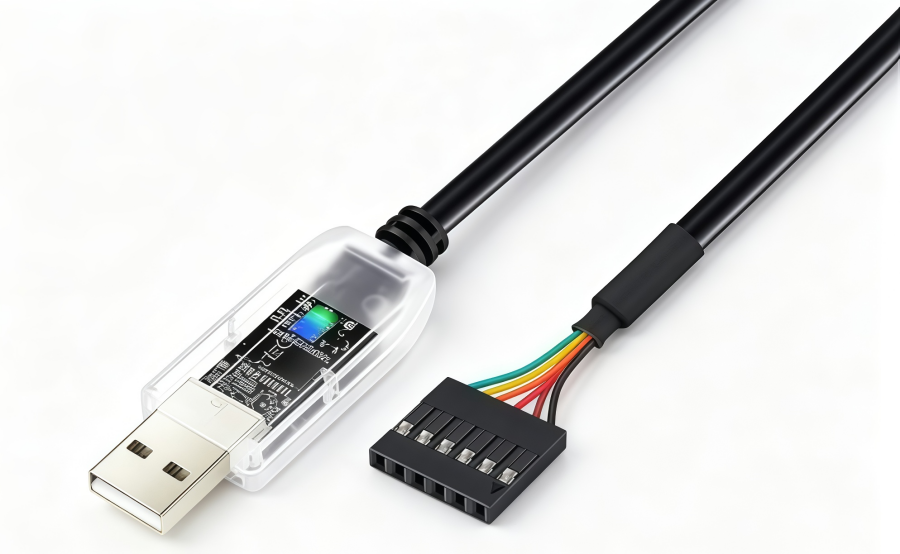
A USB-to-Serial chip (USB to UART Bridge IC) is an interface device that enables conversion between USB interfaces and serial communication protocols. Its core function is to convert USB signals from a computer into traditional serial communication signals (such as UART or TTL levels), thereby enabling stable communication between modern USB-based devices and embedded systems. This type of chip is widely used in microcontroller development boards, industrial control equipment, debugging tools, and various embedded systems.
1. Working Principle of USB-to-Serial Chips
The operation of a USB-to-Serial chip is essentially a process of “protocol conversion + data buffering + level adaptation.” When a computer sends data via the USB interface, the internal controller of the chip first parses the USB protocol packets and converts them into serial communication data (UART format), which is then output through TX/RX pins to the target device.
In the reverse direction, UART data transmitted from the serial device is repackaged into USB data packets by the chip and sent back to the computer via the USB interface, enabling bidirectional communication.
2. USB and UART Protocol Conversion
The USB protocol is a complex host-controlled high-speed communication protocol, whereas UART is a simple asynchronous serial communication method. The key function of a USB-to-Serial chip is to seamlessly bridge these two fundamentally different communication mechanisms:
l USB side: responsible for device enumeration, data packet encapsulation, and high-speed communication with the PC host
l UART side: responsible for simple, low-speed, point-to-point communication with MCUs or peripheral devices
Through an internal protocol conversion engine, the chip converts USB data streams into standard UART frame formats (start bit, data bits, parity bit, stop bit), enabling cross-protocol communication.
3. Enabling Communication Between PC and MCU
In embedded development, USB-to-Serial chips serve as the most common communication bridge between PCs and MCUs (microcontrollers). Developers can use serial terminal tools on a computer to directly interact with MCUs, enabling:
l Firmware downloading and upgrading
l Real-time data monitoring
l Command transmission and response feedback
l System status debugging
This communication method is simple, stable, and cost-effective, making it an essential tool in engineering development.
USB-to-Single-Serial Port Chip Solution
The USB-to-single-serial port chip solution integrates a USB interface and a single UART channel into one chip, enabling an efficient and compact communication architecture. This solution helps reduce overall BOM cost and is compatible with mainstream operating systems such as Windows, Linux, and macOS, without requiring complex driver adaptation.
This solution is mainly used in:
l MCU development boards
l Industrial controllers
l Smart home devices
l Portable testing equipment
l Communication terminals
USB-to-Dual-Serial Port Chip Solution
The USB-to-dual-serial port chip solution enables multiple UART channels to be expanded through a single USB interface, supporting a multi-device communication architecture. By managing multiple serial ports through a unified USB host interface, it helps optimize data transmission structure and improve communication efficiency.
This solution is widely used in:
l Industrial gateways
l Serial servers
l Data acquisition systems
l Smart communication terminals
USB-to-Quad-Serial Port Chip Solution
The USB-to-quad-serial port chip solution is designed for multi-serial parallel communication requirements. It expands four independent UART channels through a single USB interface, meeting the needs of complex systems requiring synchronized multi-device communication and concurrent data processing. At the same time, a centralized USB management architecture further improves communication latency and system stability.
This solution is mainly used in:
l PLC control systems
l Industrial automation equipment
l Robotics control platforms
l Test and measurement equipment
l Edge computing terminals
WCH USB-to-Serial Chip Solutions
WCH provides a complete and mature USB-to-serial chip portfolio, covering single-channel, multi-channel, and high-integration application requirements. Its cost-effective USB-to-UART product families include CH9102X, CH342F, CH9104L, and other series, supporting industrial control and multi-node data communication applications.
These models serve as ideal replacements for various imported USB-to-serial chips (such as FT232 and CP2102), helping customers achieve stable supply and localized supply chain optimization.
What is a USB HUB Controller Chip?
A USB HUB controller chip is a core device used to expand the number of available USB interfaces. It can convert a single USB host port into multiple USB downstream ports, enabling simultaneous connection and communication with multiple devices. As a fundamental component for USB interface expansion and device interconnection, USB HUB chips are widely used in computer peripherals, industrial equipment, and consumer electronics.
The core function of a USB HUB chip is to centrally manage and distribute USB data traffic. It not only provides USB port expansion, but also handles data forwarding and traffic scheduling, ensuring stable operation of multiple peripheral devices under a single USB host controller.
USB2.0 4-Port HUB Solution
The USB2.0 4-port HUB solution provides four USB port expansion capabilities with plug-and-play functionality. It requires no complex driver configuration and offers strong system compatibility and stability, making it a cost-effective basic USB expansion solution.
This solution is mainly used in:
l Office equipment
l Printing devices
l Industrial control hosts
l Educational electronic devices
USB2.0 7-Port HUB Solution
The USB2.0 7-port HUB solution is designed for higher-density multi-device connectivity requirements. It provides seven USB expansion ports, significantly enhancing peripheral device connectivity. This solution supports complex peripheral management and simultaneous multi-device operation.
It is widely used in:
l Industrial PCs
l KVM devices
l Smart terminals
l Data center auxiliary equipment
USB3.0 4-Port HUB Solution
The USB3.0 4-port HUB solution is designed for high-speed data transmission applications. It provides four high-speed USB expansion ports, supports high-bandwidth data communication requirements, and is backward compatible with USB2.0 devices, balancing performance and compatibility.
It is mainly used in:
l Industrial vision systems
l AI edge computing devices
l Video capture systems
l Medical imaging equipment
l High-speed storage docking stations
WCH USB HUB Controller Chip Solutions
WCH provides a complete USB HUB product portfolio, covering both USB2.0 and USB3.0 multi-port expansion solutions with strong stability and cost advantages, including CH334Q, CH338X, CH634W6T, etc.
These chips serve as ideal replacements for various imported USB HUB controller solutions and are widely used in consumer electronics, industrial control, and embedded system applications.
Ande Electronics: Providing USB Interface IC Solutions
Ande Electronics focuses on providing high-performance IC solutions, including core products such as USB-to-Serial chips and USB HUB controller chips, delivering stable and reliable interface connectivity solutions for customers.
In addition, we primarily offer the full range of USB interface ICs from WCH, including USB-to-Serial and USB HUB solutions. These products feature strong compatibility and can meet the requirements of a wide variety of complex application scenarios.
Ande Electronics supports Pin-to-Pin replacement solutions for mainstream imported chips, helping customers achieve rapid substitution and system upgrades. We also provide professional component selection support, alternative solution design, and stable supply services to ensure long-term supply chain security and project continuity.