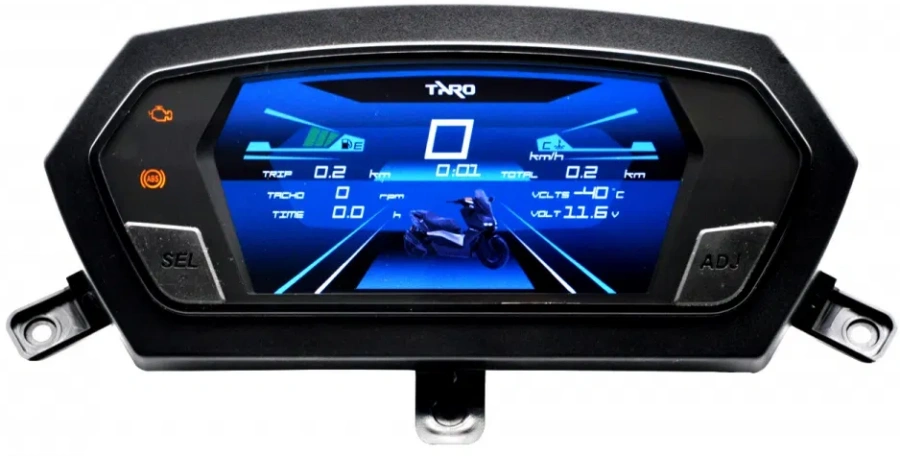
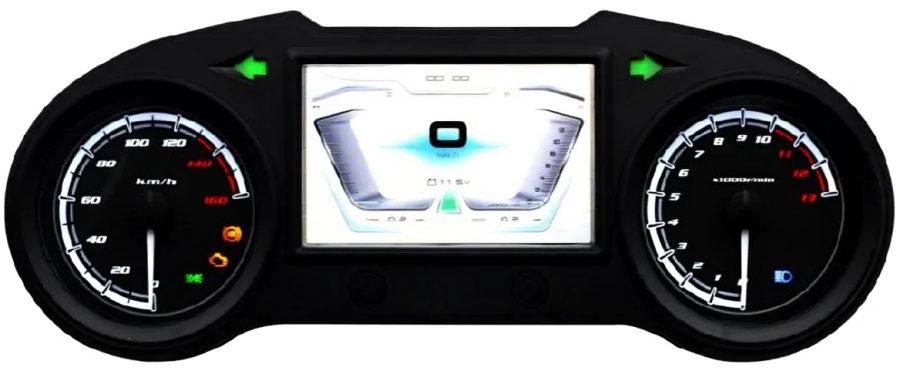
Motorcycle instrument panels are crucial for providing riders with real-time information such as speed, fuel levels, and warning indicators. These displays must perform reliably in a variety of challenging conditions, including exposure to vibrations, extreme weather, and fluctuating lighting. Industrial LCDs are often chosen for motorcycle dashboard because they offer enhanced durability and performance compared to consumer-grade displays.ANDESOURCE will now analyze why industrial LCDs are preferred for motorcycle instrument panels, and what considerations should be kept in mind when selecting industrial LCD for motorcycle instrument panels.
1. Vibration Resistance
Motorcycles are subject to continuous vibrations from both the engine and road surfaces. Many industrial LCDs are designed to handle vibrations, particularly those used in automotive, heavy machinery, or outdoor equipment. These displays are built with reinforced components and secure mounting to ensure stable performance. However, not all industrial LCDs are designed with motorcycle-level vibration resistance, especially models intended for stationary or indoor industrial applications.
2. Water and Dust Resistance
Motorcycles frequently encounter rain, mud, and dusty environments, making waterproofing and dust protection essential. Industrial LCDs designed for outdoor use or harsh environments typically feature protective enclosures that guard against moisture and debris. Displays intended for indoor use, however, may lack this level of protection. When selecting an industrial LCD for a motorcycle, it’s important to ensure it meets the necessary water and dust resistance levels.
3. Visibility in Varying Lighting Conditions
Motorcycles operate in diverse lighting conditions, from bright sunlight to nighttime environments. Many industrial LCDs designed for outdoor use offer high brightness and good contrast for readability in direct sunlight. However, industrial displays intended for indoor environments may not provide sufficient brightness for outdoor use. For motorcycles, selecting a display with appropriate brightness and contrast is critical for safe and clear information visibility.
4. Wide Viewing Angles
Riders view their dashboards from different angles, depending on their posture and movement. Some industrial LCDs, particularly those using IPS technology, offer wide viewing angles and consistent color reproduction. However, displays using TN (Twisted Nematic) technology, which are common in certain industrial settings, have narrower viewing angles and may not be suitable for motorcycle applications where off-angle readability is important.
5. Quick Response for Real-Time Information
Motorcycles require real-time updates on speed, fuel levels, and other critical data. Many industrial LCDs are designed with fast response times to meet the demands of dynamic environments like automotive or industrial control systems. However, displays used for static information in less dynamic settings may not prioritize quick response times. Ensuring the chosen display meets the real-time requirements of motorcycle use is essential.
6. Glare Reduction for Daytime Visibility
Glare from sunlight can make it difficult to read displays during daytime rides. Some industrial LCDs feature anti-glare coatings to minimize glare, particularly those intended for outdoor or public information displays. However, this feature is not universal across all industrial LCDs. It’s important to verify glare reduction features when selecting a display for motorcycle dashboards.
7. Performance in Extreme Temperatures
Motorcycle displays are exposed to a wide range of temperatures, from cold mornings to heat generated by the engine and sunlight. Many industrial LCDs are designed to operate in extreme temperatures, especially those used in outdoor signage or automotive environments. However, LCDs intended for climate-controlled indoor settings may not have the necessary temperature tolerance. For motorcycles, it’s important to ensure the display can function reliably in both hot and cold conditions.
8. Power Efficiency
Motorcycles have limited battery capacity, making energy efficiency a key consideration. Some industrial LCDs, particularly those designed for portable devices or battery-powered equipment, are built with low power consumption in mind. However, displays with high brightness or advanced graphical capabilities can consume more power. Selecting an energy-efficient display is crucial for preserving battery life on long rides.
9. Ease of Operation
Motorcycle displays need to be easy to operate while riding, often requiring compatibility with glove use or physical buttons. Many industrial LCDs are designed for ease of operation in factory or control room environments. Displays with glove-friendly touchscreens or simple button interfaces are better suited for riders who need quick and distraction-free access to information.
ANDESOURCE: High-Quality LCDs for Tough Environments
At ANDESOURCE, we offer top-tier LCD solutions designed to thrive in demanding conditions. Our solutions are crafted to ensure reliable, long-lasting performance. Here's what makes us different:
Fast Delivery: We know how crucial timelines are. That’s why we focus on providing fast delivery to help keep your projects moving smoothly.
Personalized Assistance: Our knowledgeable team is always ready to offer professional advice, ensuring you choose the right LCD for your needs.
Built to Last: Each LCD is rigorously tested to ensure it holds up to tough conditions, providing steady performance over time.
Customized Solution: Need special features like enhanced brightness, touch functionality, or specific driver boards? We offer tailored solutions that fit your project perfectly.
Quality You Can Trust: We only supply genuine LCD panels, so you can be confident in their reliability and long-term performance.
Reach out to ANDESOURCE today and discover how our customizable LCD displays can provide the ideal solution for your tough projects.