In modern computers and electronic devices, memory is an important part of improving system performance. DDR is developed from standard SDRAM. It is a type of DRAM similar to SDRAM, but it can read and write data twice per clock cycle, effectively doubling the data transfer speed. DDR is the most widely used memory in computers today and also offers cost advantages.
Understanding the basics, working principle, and applications of DDR memory is important for optimizing system configuration and improving device efficiency. This article will also compare different DDR versions, helping beginners and tech enthusiasts make informed choices.
What is DDR?
DDR stands for Double Data Rate Synchronous Dynamic Random Access Memory. It is a type of SDRAM with double data transfer speed.
Standard SDRAM works on the rising edge of a clock cycle, meaning it operates once per clock cycle. DDR technology allows the memory to operate on both the rising and falling edges of each clock cycle. This means DDR memory can work twice in a single clock cycle, completing twice the work of standard memory in the same time.
DDR memory requires a synchronous clock, meaning all internal commands and data transfers are timed according to this clock.
In essence, DDR can double the speed of SDRAM without increasing the clock frequency. It allows data to be read on both the rising and falling edges of the clock, making its speed twice that of standard SDRAM. The address and control signals, however, remain the same as traditional SDRAM and are still processed on the rising edge of the clock.
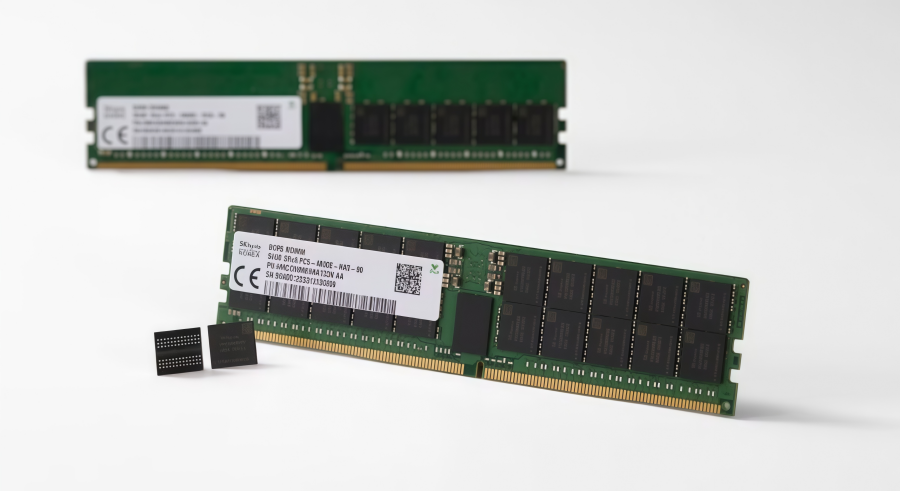
Basic Principle of DDR RAM
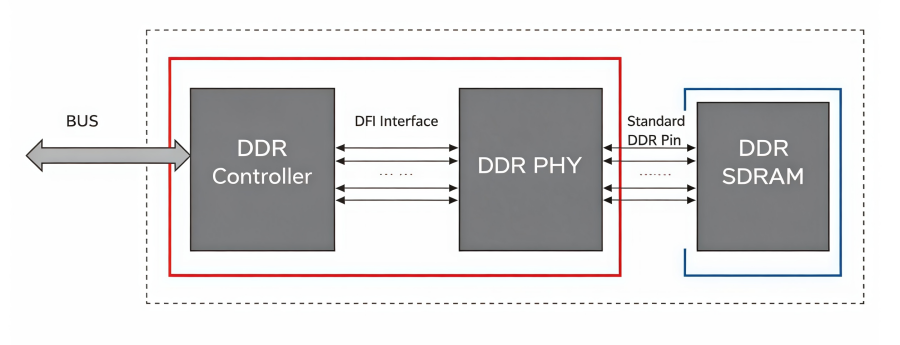
The basic DDR subsystem architecture consists of a DDR Controller (DDRC), a DDR PHY, and SDRAM devices. A DDR IP typically includes the DDR Controller and the DDR PHY.
Internally, it involves many functions, including but not limited to data ordering, arbitration, optimal scheduling, protocol state machine design, anti-starvation mechanisms, bypass paths, fast frequency switching, and DDR training.
DDR Memory Working Principle
When the clock reaches a certain frequency, DDR RAM begins operating, following a basic “read-store-read” process. The chip first fetches data from the main memory, stores it in internal memory cells, and then transfers it to the processor, which processes the data and returns the results to the main memory.
DDR’s double data rate allows each clock cycle to perform both “read-store” and “store-read” operations simultaneously, greatly improving data transfer efficiency. Combined with multi-channel transmission and data verification techniques, DDR memory achieves higher speed and reliability, making it the mainstream memory for modern computers.
l Memory Chips – A DDR memory module contains multiple memory chips. Each chip has storage cells, and each cell has an address for reading or writing data.
l Data Bus – The module connects to the computer’s memory controller through the data bus. The bus can transmit multiple bits at once, such as 64-bit or 128-bit.
l Clock Signal – DDR RAM uses a clock signal to synchronize operations. On the rising edge, data moves from the memory chip to the data bus; on the falling edge, data moves from the data bus back to the chip.
l Precharge – Before data transfer, the module performs precharge to reset the charge in memory cells, ensuring accurate data transfer.
l Data Transfer – DDR uses multi-channel data transfer, sending multiple bits simultaneously to move more data per clock cycle.
Comparison of Different DDR RAM Generations
As computer performance and app demands keep growing, DDR memory has come a long way. From the original DDR to DDR2, DDR3, DDR4, and now the latest DDR5 RAM, each new generation has brought huge leaps in speed, power efficiency, and storage capacity.
Here is a breakdown of the key specs from DDR through the latest DDR5:
Generation | Released | Core Voltage (V) | Common Speed (MHz) | Max Capacity (Per Dim) | Power Consumption | Key Features |
DDR | 2000 | 2.5 | 266 - 400 | 1 GB | High | DDR (2 data transfers/clock) |
DDR2 | 2003 | 1.8 | 533 - 800 | 4 GB | Relatively high | 4n-Prefetch, Lower Power |
DDR3 | 2007 | 1.5 / 1.35 | 1066 - 2133 | 16 GB | Medium | 8n-Prefetch, ASR, DDR3L |
DDR4 | 2014 | 1.2 | 2133 - 3200+ | 64 GB | Low | Bank Groups, DBI, CRC |
DDR5 | 2020 | 1.1 | 4800 - 8400+ | 128 GB+ | Lowest | On-die ECC, PMIC, Dual-Channel |
Notes:
l MT/s means million transfers per second
l Bandwidth is based on a 64-bit data bus
l Different DDR generations are not physically compatible and cannot be mixed
DDR RAM Applications
DDR RAM has become one of the most widely used dynamic memory solutions in modern systems. It supports a wide range of applications, from general-purpose computing to specialized systems. This section introduces the typical applications of DDR memory across different fields.
Computers and Laptops
DDR RAM is the most common type of system memory in desktop and laptop computers, used to store the operating system, applications, and temporary data. Its high-speed read and write capabilities significantly improve system boot speed and multitasking performance.
Servers and Data Centers
In servers and data centers, DDR RAM handles large-scale data caching and high-speed access. It is widely used in cloud computing, databases, virtualization, and big data analytics.
Embedded Systems and Industrial Equipment
Many embedded devices and industrial control systems (such as PLCs, human-machine interfaces, and industrial computers) use DDR memory to run operating systems and real-time applications.
Consumer Electronics
In smart TVs, set-top boxes, game consoles, and high-end routers, DDR memory is used to process images, video, and network data. It enhances multimedia processing capabilities and user experience.
Automotive Electronics and Smart Devices
In in-car infotainment systems, ADAS (Advanced Driver-Assistance Systems), and smart terminals, DDR RAM is used to support graphics display, sensor data processing, and real-time computing.
Ande Electronics: Advanced Memory Chip Solutions For You
Ande Electronics has been deeply engaged in chip technology, introducing a series of high-quality memory chip solutions. In response to the growing demand for data processing and memory, Ande’s product portfolio covers various types and capacities of memory, including DDR RAM, HBM, and more, to meet the diverse application needs ranging from consumer electronics to industrial systems.
Backed by a well-established supply chain and flexible delivery mechanism, Ande Electronics not only delivers high-quality memory chip products but also provides end-to-end technical support, covering component selection, system design, and performance verification. Through continuous innovation and reliable supply, Ande is committed to empowering intelligent applications with robust data Memory capabilities, helping customers achieve safer and more efficient digital transformation.